The team of the National Institute of Oceanography and Applied Geophysics – OGS for the Project RESources in Coastal groundwater Under hydroclimatic Extremes (RESCUE), funded by Water 4 All and co-funded by the European Union, has published its first scientific article intended for the general public in Italy.
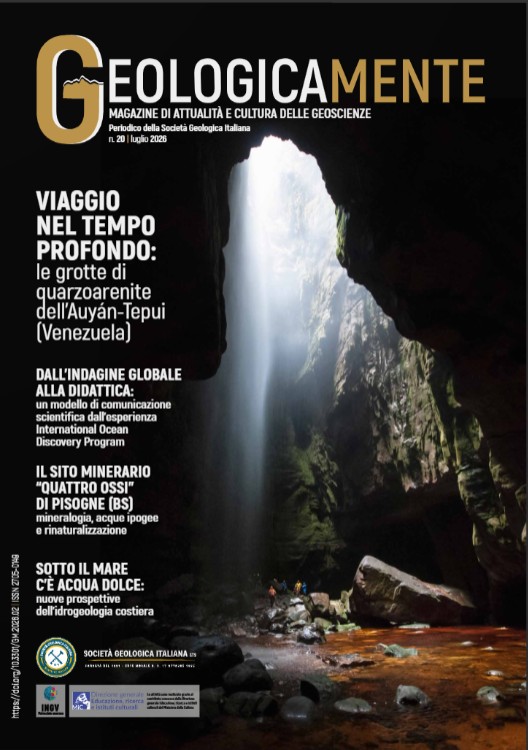
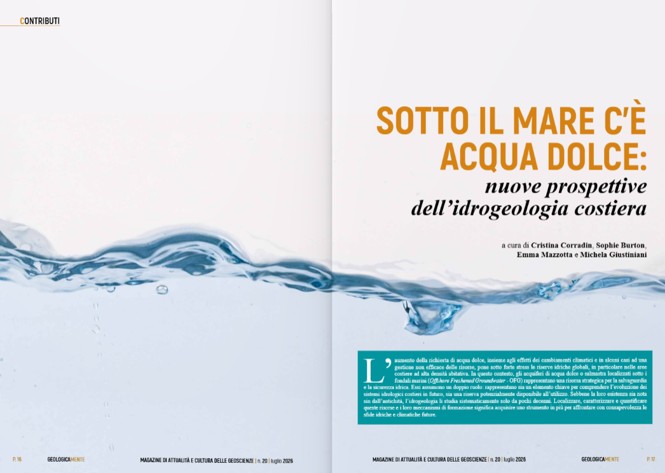
Geologicamente is the Italian Geological Society‘s current affairs and culture magazine for geosciences. Founded in 2020, the magazine is published three times a year, in November, March, and July, and is aimed at those working in the lower education sector and above. In the last issue of July 2026, Volume 20, the RESCUE team finally saw the result of months of work in black and white with the publication of the article ‘Sotto il mare c’è acqua dolce: nuove prospettive dell’idrogeologia costiera/ Freshwater Beneath the Sea: New Perspectives on Coastal Hydrogeology.’ [1]
[1] Corradin, C. (2026, July). Sotto il mare c’è acqua dolce: nuove prospettive dell’idrogeologia costiera. Geologicamente. Sotto il mare c’è acqua dolce: nuove prospettive dell’idrogeologia costiera.
The increasing demand for freshwater, combined with the effects of climate change and, in some cases, ineffective resource management, is placing severe stress on global water reserves, particularly in densely populated coastal areas. In this context, freshwater aquifers located beneath the seabed (Offshore Freshened Groundwater – OFG) represent a strategic resource for water protection and security. They play a dual role: they are both a key element in understanding the evolution of coastal hydrological systems in the future and a reserve potentially available for use. Although their existence has been known since ancient times, hydrogeology has only been systematically studying aquifers for a few decades. Locating, characterising, and quantifying these resources and their formation mechanisms means acquiring an additional tool to confidently address future water and climate challenges. Working from this context, the article goes on to explore various elements of OFG, including why freshwater is a resource at risk; the history of underwater freshwater springs dating back to Roman antiquity; how these reserves are formed and methods of investigation; and finally, why these reserves matter for our future.
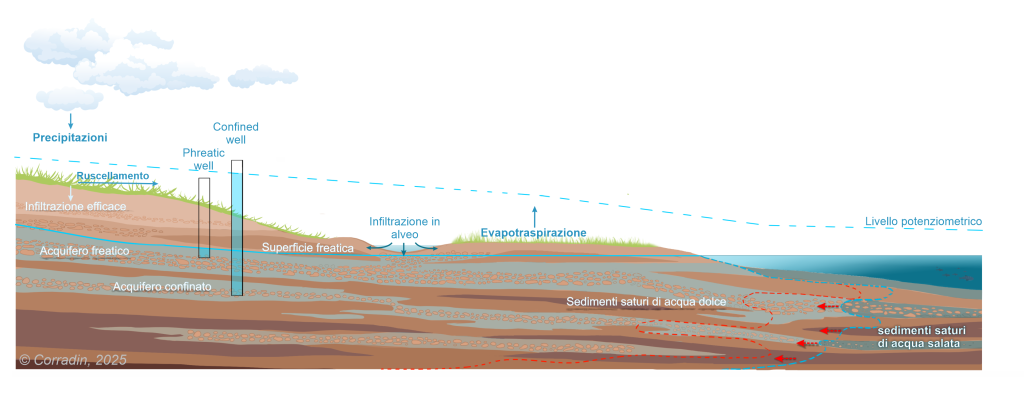
Written by RESCUE Researcher Cristina Corradin, additional contributions were made by Sophie Burton Pogledic (RESCUE communications), Emma Mazzotta (RESCUE legal) and Michela Giustiniani (Senior Researcher). Corradin also produced two of her own illustrations for the publication, firstly with a diagram highlighting the coastal hydrogeological system and landward retreat of the freshwater-saltwater transition zone during pumping (in Italian below).
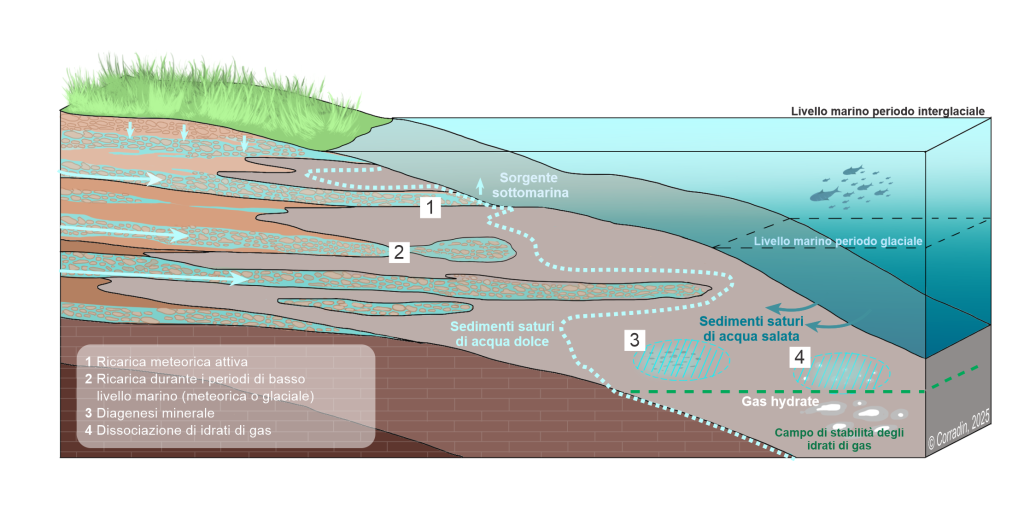
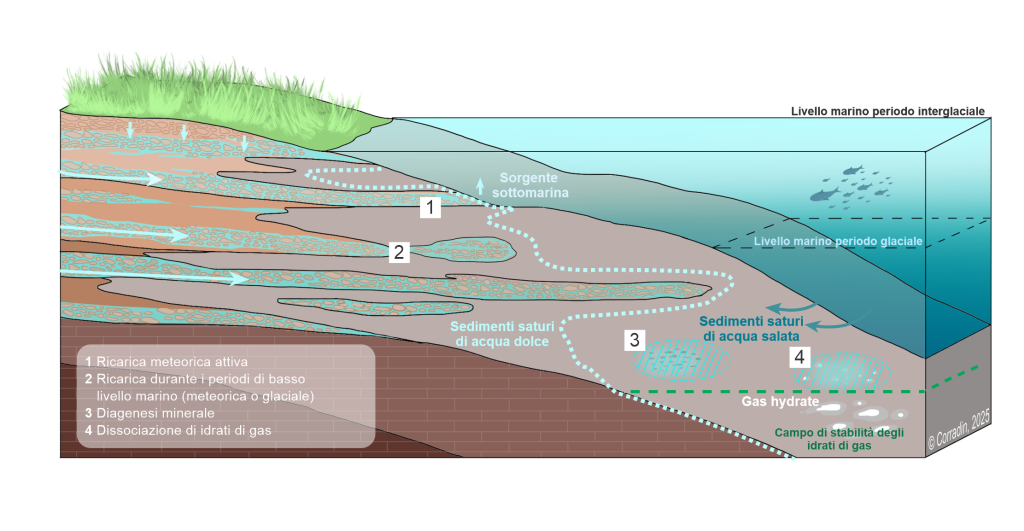
Her second diagram showcased the main mechanisms of OFG storage: 1. Active meteoric recharge; 2. Meteoric recharge during periods of low sea level; 3. Gas hydrate dissociation and; 4. Mineral diagenesis (in Italian below).
Moving from the science to the history, the article also discusses the earliest evidence of freshwater under the seabed dating back to the Roman geographer Strabo (63 BC–21 AD), who described an underwater spring 2–5 miles off the coast of Latakia in present day Syria. The story of OFG continues throughout history, as described in 15th Century Arabic manuals on the waters of Bahrain through to the story of the shipwrecked crew of the whaling vessel Essex, who were stranded on Henderson Island in the Pacific in 1820. More recently, the Italian engineer Giorgio Rosa from Bologna, designed and built a platform in the Adriatic, off the coast of Rimini in 1968, using it to dig a well 150 metres below the seabed from which freshwater was extracted. He declared this piece of sea an independent micronation, naming it the ‘Isola delle Rose’ or ‘Island of Roses,’ which achieved cult status in OFG circles although it has since been dismantled.
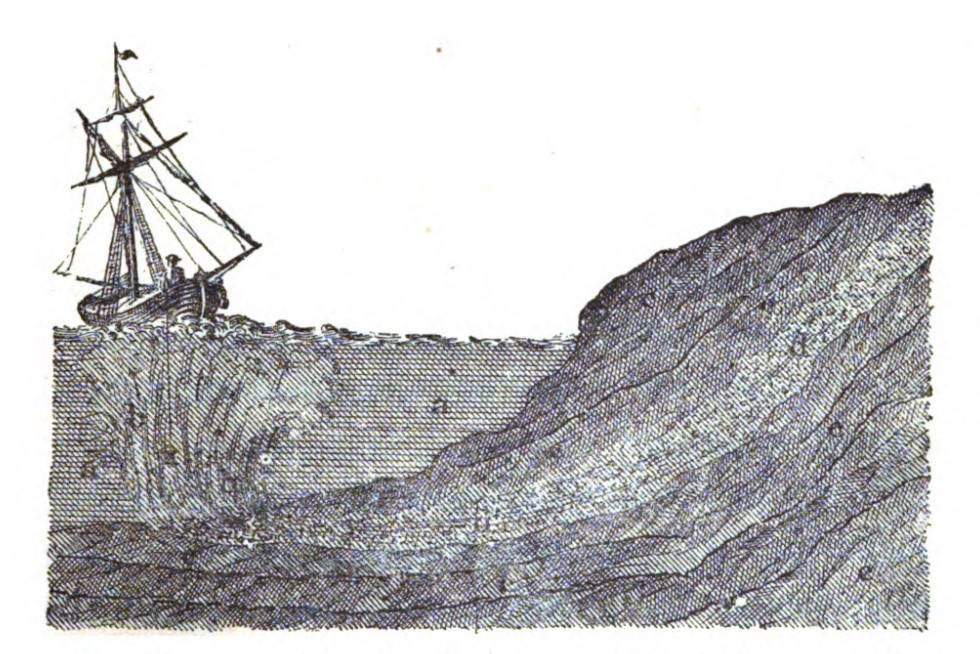
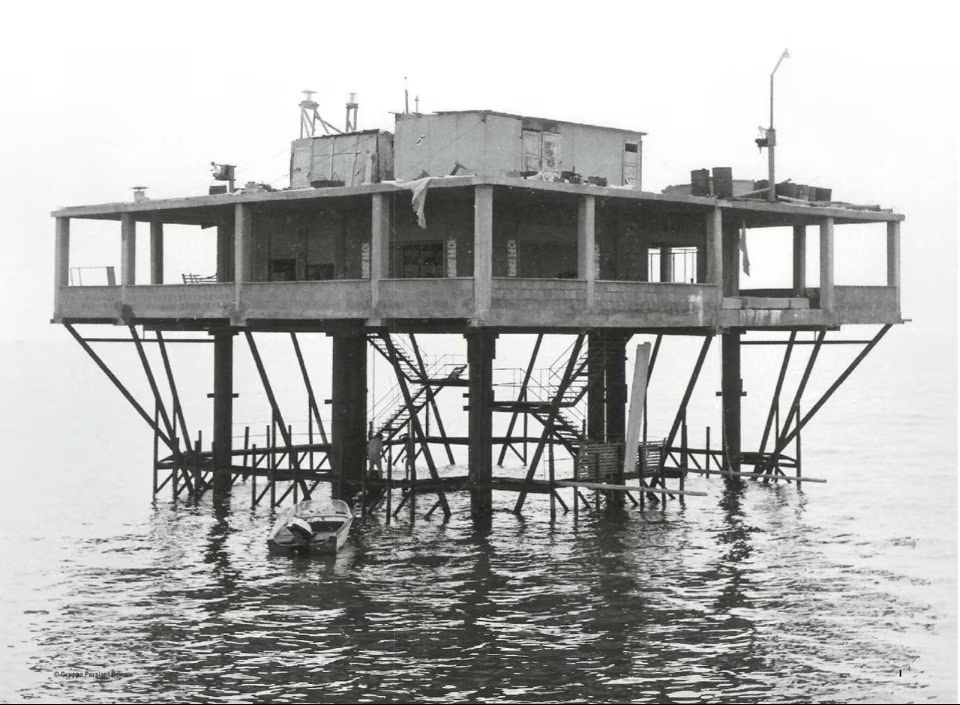
Above from left to right: historical depiction of water extraction from an underwater spring[2]; the ‘Island of Roses’ micronation.[3]
[2] Image credit: Sonrel, 1868.
[3] Image credit: Photographic Archive of the Gambalunga Civic Library, Rimini.
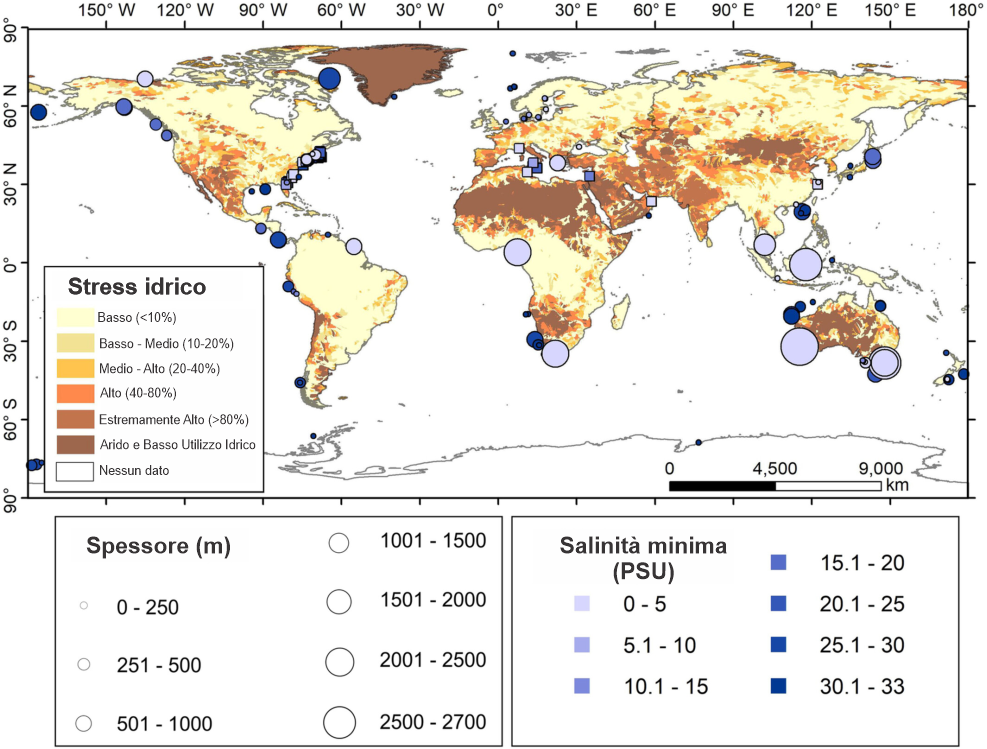
Above: Map updated to 2021 showing the geographic locations of OFG classified by salinity and aquifer thickness, superimposed on a water stress map.[4]
[4] Image credit: Micallef (University of Malta) et al., 2021
The objective of RESCUE is to build knowledge of deep-coastal and offshore low salinity aquifers in European coastal areas, to evaluate novel water resources and to help secure a steady supply of water to both population and industry in times of hydroclimatic extremes.
The 36-month long Project, which began in March 2024, is led by the University of Trieste (UNITS), and as well as OGS, includes partners Ruden AS, University of Derby (UoD) and University of Malta (UM).