Angelo Camerlenghi, Research Director at the National Institute of Oceanography and Applied Geophysics – OGS, and part of the Project team for RESources in Coastal groundwater Under hydroclimatic Extremes (RESCUE), funded by Water 4 All and co-funded by the European Union, was at the forefront of public appearances for the Project in May.
He featured on the regional Rai radio programme for Friuli-Venezia Giulia, RADAR, during which he was interviewed for a slot by Simona Regina. The episode, titled Acqua dolce nei fondali marini. Il libro “Water grabbing”. Terra chiama Terra e le auto elettriche / Freshwater on the ocean floor. The book “Water Grabbing.” Earth Calls Earth and Electric Car, aired a discussion with Prof. Camerlenghi about Rescue and what the Project is trying to achieve, while the programme’s weekly recommended reading was “Water Grabbing: The Hidden Wars for Water” by Emanuele Bompan, an environmental journalist and geographer who presented his book at the Staranzano Water Festival in late May, where Prof. Camerlenghi also appeared.
You can listen to the interview here in Italian with RaiPlay Sound, published on 19 May.
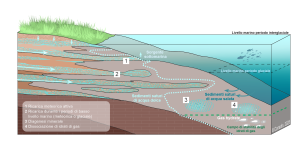
At the end of the busy month of May, Prof. Camerlenghi went on to appear at the Staranzano Water Festival near Monfalcone in the province of Gorizia on 24 May, at the event RESCUE – Un progetto europeo per esplorare le falde acquifere sotto i fondali marini / RESCUE – A European project to explore aquifers beneath the seabed. The event, which was open to the general public, saw Prof. Camerlenghi delivering a short presentation on RESCUE and its study of freshwater reserves under the seabed of the Northern Adriatic, including the mapping of deep, low-salinity aquifers.
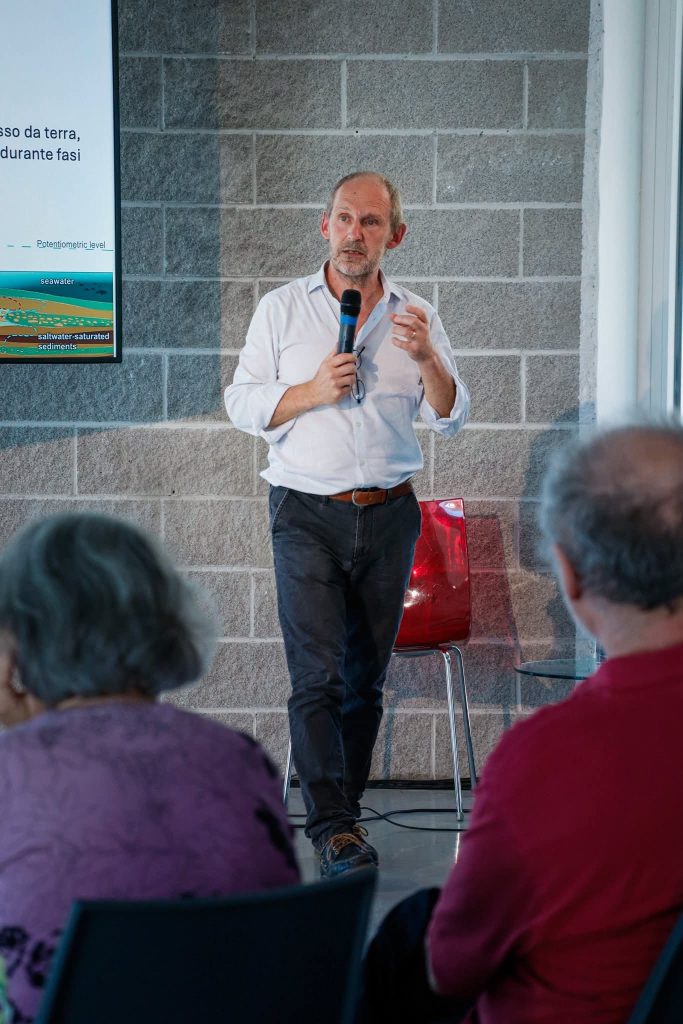
Left: Angelo Camerlenghi at Staranzano Water Festival
RESCUE began in March 2024 with the aim to build knowledge on offshore and deep onshore low salinity aquifers in European coastal areas, to evaluate novel freshwater resources, and help secure a steady supply of water to both population and industry, in times of hydroclimatic extremes.
The Project is led by the University of Trieste (UNITS) and is focused on helping to establish the foundations for the evaluation of new resources for local and regional policy makers, while the global applicability of the outputs will allow upscaling to Europe-wide or other large areas worldwide, where water is needed. The Consortium of the 36-month long project also includes National Institute of Oceanography and Applied Geophysics – OGS, Ruden AS, University of Derby (UoD) and University of Malta (UM).