The seminal project RESources in Coastal groundwater Under hydroclimatic Extremes (RESCUE), funded by Water 4 All and co-funded by the European Union, stepped into the world of the researcher Corinna Guerra last week, who is based at Ca’ Foscari University of Venice. RESCUE aims to connect the actors working within the growing body of research on groundwater extraction and to encourage the growth of a transdisciplinary community focused on finding novel solutions to global water shortage.
A historian of science specialising in the development of 18th century chemistry in the South of Italy and of natural disasters, Guerra now pursues environmental studies, and has created the first international Winter School in Interdisciplinary Biodiversity for the National Biodiversity Future Centre, while collaborating with the first Italian Max Planck Partner Group The Water City. She is also co-responsible for one of the nine pilots of the Columbia University of New York project Crafting an Open-Source Digital Publication Tool for the History of Science.
As Scientific Coordinator of the UNESCO Chair ‘Water Heritage and Sustainable Development’, directed by Prof. Omodeo, which participates in the ReCUI to which the Ministry of University and Research awarded a Seal of Merit, RESCUE was eager to gain Corinna Guerra’s insight into the area of water resources.
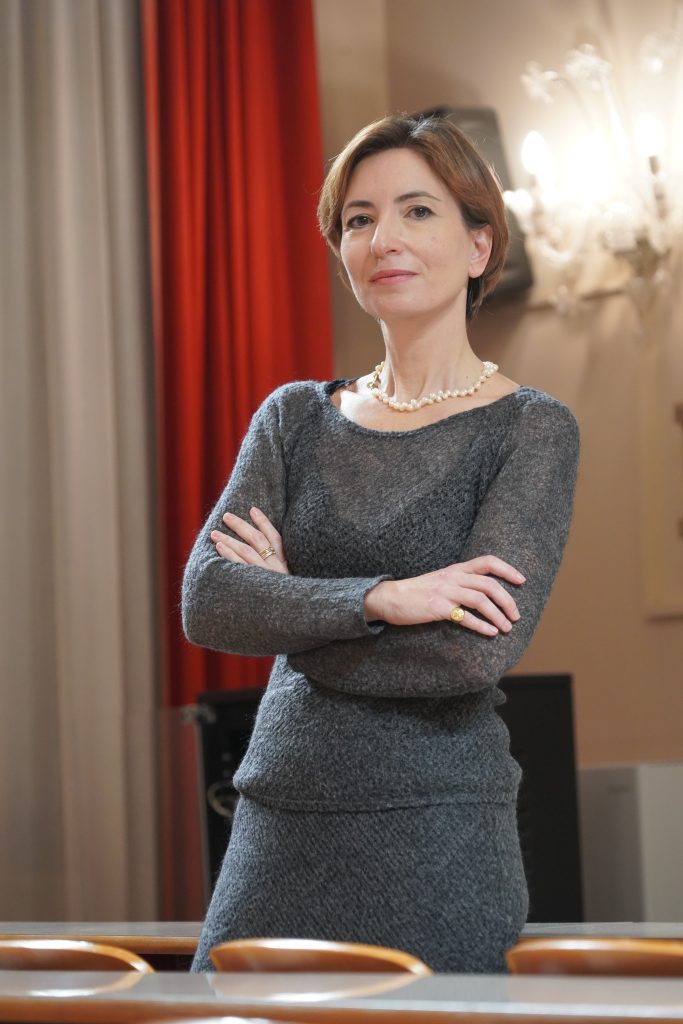
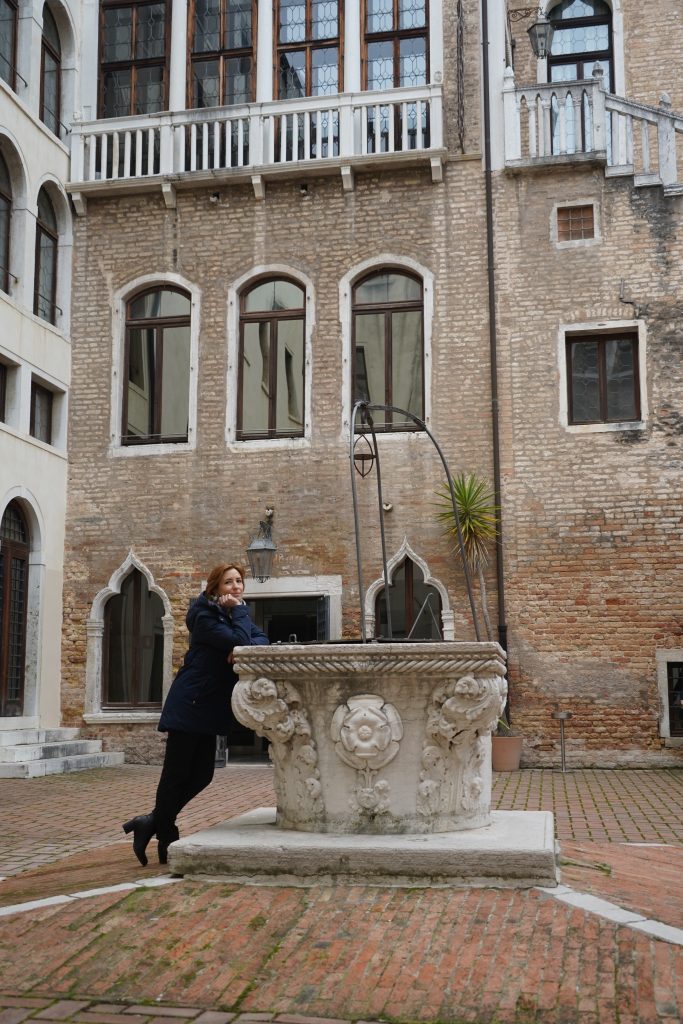
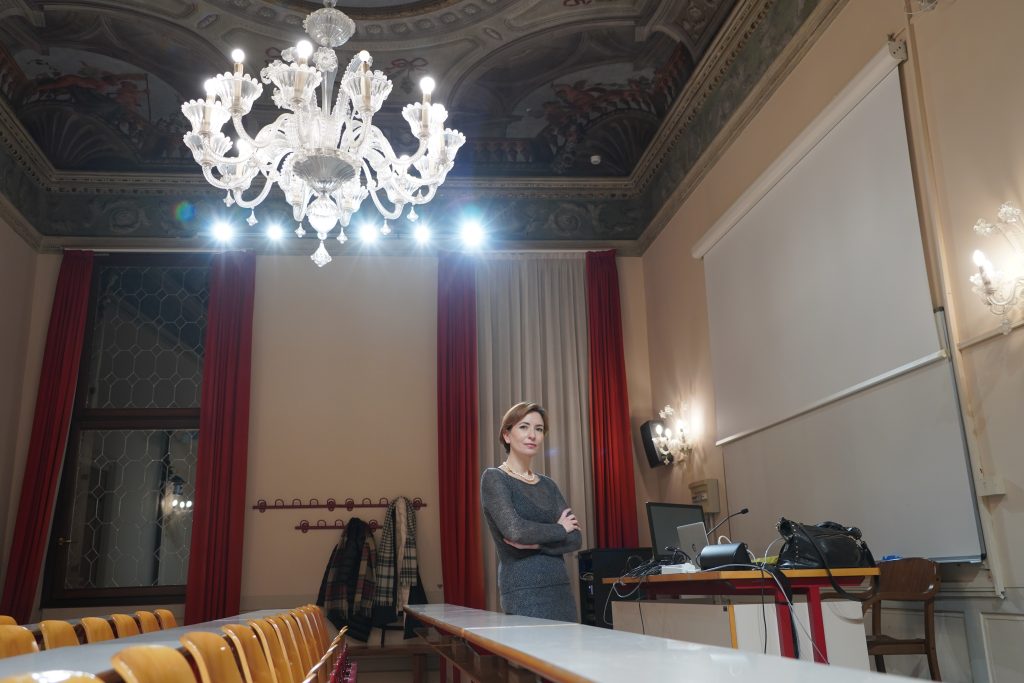
Above: Corinna Guerra (left: lectures room in Ca’ Bembo building, Ca’ Foscari University of Venice, cover photo and photos above taken by Antonella Di Giacobbe)
“The RESCUE Project should be a step in this preventive research for alternative aquifers, to reduce our vulnerability.” She believes if we understand the characteristics and distribution of such aquifers, it will be possible to avoid overexploitation.
To mitigate risk, it is essential to understand. And Corinna Guerra underlined the need to accept that extreme weather events are endemic and not merely isolated events, thus obligating us to adapt and change our habits as a population in relation to the use of water. Risk cannot be reduced, but certainly the number of victims can be. Corinna Guerra believes although the water supply is adequate today, it is still the right moment to explore unconventional sources, as searching in the middle of an emergency will only aggravate a critical situation.
Corinna Guerra will appear in a forthcoming podcast series RESCUE is set to release later this year. She was also present as an external expert consultant at the RESCUE mid-term meeting last year. On offshore freshened groundwater, Corinna says:
“If we leave the discovery… to chance, this could become a market commodity. Instead, a systematic and internationally coordinated study would preserve the universal nature of this reservoir as water for all…everything is interconnected: surface, subsurface, seas, suboceanic floors, and us – I mean all the living organisms, inhabitants, lands and waters.”
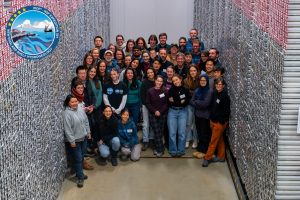
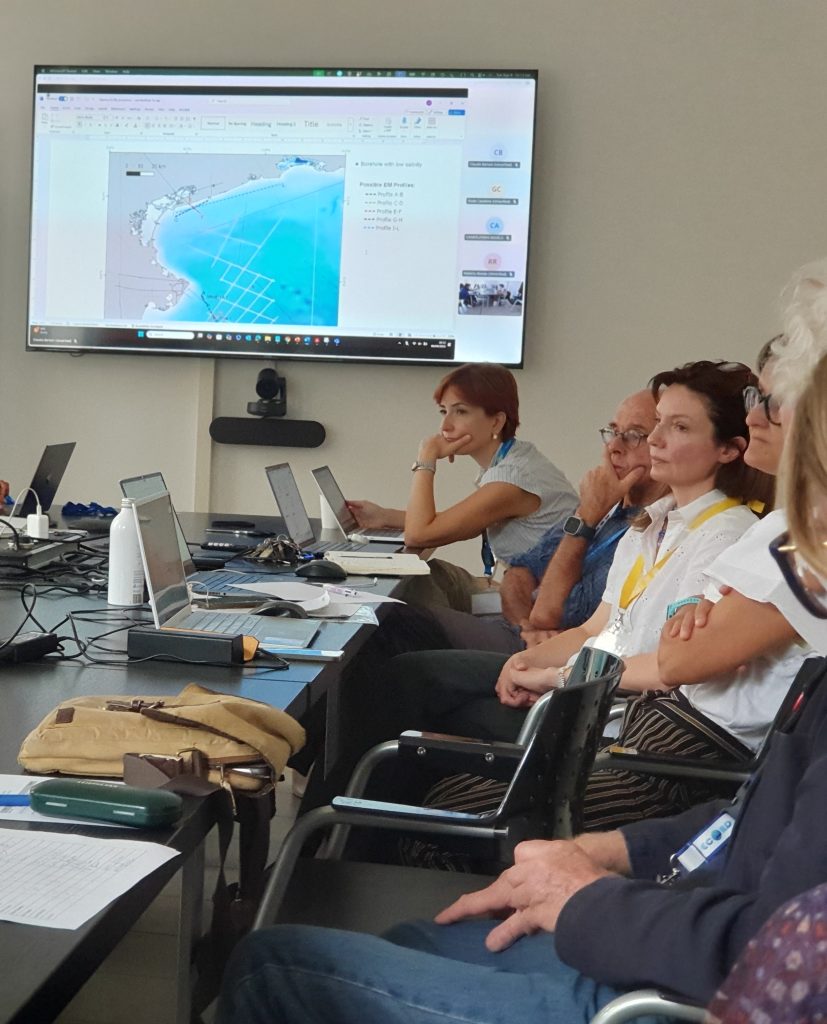
Below: Corinna Guerra at the RESCUE mid-term meeting, 2025
RESCUE began in March 2024 with the aim to build knowledge on offshore and deep onshore low salinity aquifers in European coastal areas, to evaluate novel freshwater resources, and help secure a steady supply of water to both population and industry, in times of hydroclimatic extremes.
The Project is led by the University of Trieste (UNITS) and is focused on helping to establish the foundations for the evaluation of new resources for local and regional policy makers, while the global applicability of the outputs will allow upscaling to Europe-wide or other large areas worldwide, where water is needed. The Consortium of the 36-month long project also includes National Institute of Oceanography and Applied Geophysics – OGS , Ruden AS, University of Derby (UoD) and University of Malta (UM).